Is Christian Nationalism the Same as Patriotism? A Fair-Minded Explainer
Drive through almost any American town in early July and you'll see the same scene: flags on porches, a picnic at the park, a hymn before the fireworks. For one church member, that is simply love of home. For another, it feels like a religious rally with a political soundtrack. Both will be sitting in the same Bible study on Wednesday night, neither sure how to talk to the other.
Two phrases keep surfacing in those conversations: patriotism and Christian nationalism. They get used as if they mean the same thing, or as if one is the respectable version of the other. They don't mean the same thing, and the difference shapes how you pray, vote, sing, and treat your neighbor.
Two Terms, Two Different Jobs
Patriotism is love for a particular place and its people — a settled affection for the country that raised you, the neighbors on your street, the customs that shaped you. It shows up in service and gratitude, and often in honest criticism, because people who love a place want it to become better than it is.
Christian nationalism is harder to pin down because it describes a set of ideas rather than one organization or party. Broadly, it treats the nation and the church as nearly the same thing: the country is understood to carry a special divine calling, Christian identity becomes the real test of belonging, and political power is seen as the proper tool for making the nation faithful. The label is contested. Some who hold these views reject it; others wear it proudly. Critics often use it as a club. That is one more reason to discuss specific claims rather than slap a word on a person.
What Patriotism Actually Looks Like
Christian patriotism, at its best, is a form of neighbor love. It prays for the city (Jeremiah 29:7), pays taxes, serves on the school board, mows a widow's lawn, and honors those who serve in uniform. It also keeps a healthy distance between the country and the kingdom. A nation can be loved without being worshipped.
Honor everyone. Love the brotherhood. Fear God. Honor the emperor. — 1 Peter 2:17
Notice the order. Honor for the emperor comes after the fear of God, which means the state is never the final authority. A patriot can say the pledge and still say no to a government that demands what God forbids.
What Christian Nationalism Claims
The clearest way to spot the difference is to look at what each one wants.
- Patriotism wants the country to flourish. Christian nationalism wants the country to be Christian in its laws, symbols, and self-understanding — and often treats that as the measure of national faithfulness.
- Patriotism makes room for dissent. Christian nationalism tends to read criticism of the nation as disloyalty, or even as opposition to God.
- Patriotism says "we" means fellow citizens. Christian nationalism slips toward "we" meaning Christians, with everyone else as guests at best.
- Patriotism serves the neighbor. Christian nationalism reaches for the levers of power, sometimes because it believes the gospel needs the state's help.
That last point is the deepest divide. The New Testament expects the church to grow through witness, suffering, and love — not through legal advantage. When a movement starts measuring the gospel by electoral results, something has shifted.
Where the Two Overlap — and Where They Part
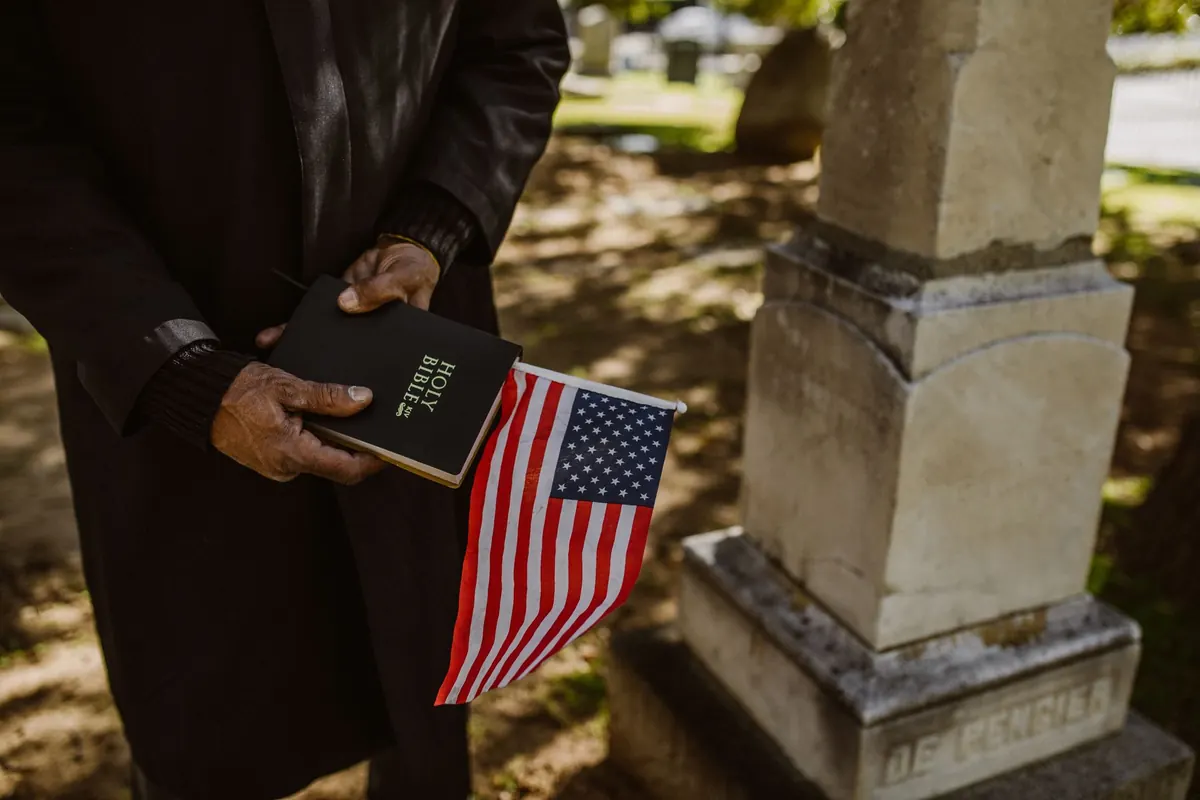
Be careful here, because the overlap is real. A Christian who votes according to conscience, speaks about moral issues in public, or is grateful to live in a free country is not automatically a Christian nationalist. Wanting laws that protect the vulnerable is ordinary citizenship. Christian nationalism begins when the nation's identity and the church's identity fuse — when the cross becomes a tribal marker and the flag becomes a test of faith.
A practical test: ask what happens when the two loyalties conflict. If your church's witness would change depending on which party holds power, the nation may already be carrying more weight than it can bear.
Questions for Your Church to Work Through
These work well in a small group, a Sunday school class, or a leadership meeting. Take one per week rather than all at once.
- When we pray for our country, what specifically are we asking God to do?
- If our preferred candidate loses an election, does it feel like the gospel lost too? Why?
- Who feels genuinely welcome in our building — and would a visitor from another country or another party agree?
- Can you name a time you disagreed with your country publicly? Was it possible without being treated as an enemy?
- What would our congregation do if the state asked us to do something Scripture forbids?
- Are we better known in our town for what we oppose, or for how we love?
A Way to Talk About It Without Splitting the Room
Start with people, not positions. Ask a veteran and a pacifist in your congregation to tell the story of how they reached their convictions; stories soften arguments faster than rebuttals do. Define terms before you debate them, and refuse to use either label as a weapon. "Patriot" and "nationalist" are descriptions at best and insults at worst.
Read something together. A short book or a handful of articles, one chapter a week, gives everyone shared language and something to point to besides each other. Keep the Lord's Supper and the sermon at the center of church life rather than the latest controversy.
And leave room for the possibility that you are the one who needs to change. Humility is not a compromise; it is the posture in which Christians have always done their clearest thinking about politics. Love your country. Pray for its leaders. Serve your neighbors. And keep your deepest loyalty where it belongs.
Photo: RDNE Stock project / Pexels

How to Fast Safely as a Christian: A Beginner's Guide to Biblical Fasting
Fasting is a normal part of Christian devotion, but it needs care. Here is how to choose a fast, prepare...

How to Talk About Faith at Work Without Being That Person
A practical guide to sharing faith at work with listening, good timing, legal awareness, and habits that...
About Us